
Pillar Article
The Ludwig Black Beauty in 2026: Still the King, or Just Tradition?
The Ludwig Black Beauty is probably the most talked-about snare in history. After six months of consistent use — gigs, studio sessions, rehearsals — here is what actually holds up and what I think people get wrong about it.
18 years playing · Tested 60+ kits
Quick Answer
- The Black Beauty still delivers a genuinely distinct tone that is hard to replicate with cheaper steel snares.
- Its reputation is partly justified and partly tradition — it is not objectively the best snare at any price.
- The engraving and finish add cost but not tone. You are paying for craft and history as much as sound.
- For studio work and jazz/funk contexts, it is still one of the most useful snares available.
- If your main gig is loud rock or metal, there are better-value options for that specific job.
Verdict
BUY
If you need a versatile, characterful steel snare that works across studio work, live jazz, funk, and lighter rock, the Black Beauty earns its price. If you primarily play loud, modern rock or metal, spend the same money elsewhere.
- Genuine tonal character that is not just marketing.
- Extremely versatile — handles brushes and sticks equally well.
- Proven studio tool across decades of professional recording.
- Holds resale value better than most snares at the price.
- Not the right tool for every context — know your genre before buying.
There is a version of the Ludwig Black Beauty conversation that gets repeated endlessly online: half the people say it is overpriced tradition, the other half say it is irreplaceable. After six months of consistent use across gigs, studio sessions, and rehearsals, I want to give you something more useful than either of those takes.
Short version: it is genuinely good, it is not universally the right choice, and the truth sits somewhere between the mythology and the cynicism.
What You Are Actually Buying
The Black Beauty is a seamless steel shell snare. The defining visual feature — the engraving — is not just decorative. The process of engraving removes material from the shell surface in a controlled way, which subtly affects how the metal vibrates. It is a small difference, not a massive one, but it is measurable and audible if you compare side by side.
What you get sonically is a steel snare that is a bit warmer and more complex than a plain unengraved steel shell. Standard steel snares tend toward a very direct, clinical attack. The Black Beauty has that steel crack, but with slightly more body and less of the harsh upper mid spike that cheaper steel snares often have.
You are also buying quality hardware. The throw-off on the standard Black Beauty is solid, the lugs are substantial, and the overall build feels like something designed to last decades — which it does. Vintage Black Beauties from the 1960s and 70s are still being gigged today.
Real-World Use: Six Months In
I used the Black Beauty (14x6.5) across three studio sessions and about twelve live shows during the review period. The contexts ranged from a jazz trio recording to a funk-influenced live band and a couple of larger venue corporate shows.
In the studio: the snare recorded beautifully in all three sessions with minimal processing needed. Engineers consistently noticed the tone. The low-end body of the shell means it sounds full even when you pull back the gain, which matters for mixing. With brushes it was particularly strong — one of the more brush-friendly steel snares I have used.
Live: in smaller-to-medium venues the character of the snare came through clearly. In larger, louder contexts it blended well but the tonal difference from a cheaper steel snare became less obvious through the PA. That is worth noting — the premium you pay for tonal nuance matters most in situations where nuance is audible.
Where It Falls Short
The Black Beauty is not a good choice if your primary context is heavy rock or metal. It has the crack and the volume, but the warmth and complexity that make it excellent for jazz and funk are not what those genres call for. A thicker, drier steel snare or an aluminium snare will often sit better in a dense distorted guitar mix.
The price is also a real conversation. At current pricing you are spending significantly more than a solid mid-tier snare. Some of that premium is genuinely in the product. Some of it is in the name and the history. If you need to stretch budget, there are steel snares at two-thirds the price that get you 85-90% of the performance.
2026 Positioning: Still Relevant?
The snare market has expanded considerably. There are more options at more price points than ever. The Black Beauty is not automatically the best snare for every context, and it never was — that framing was always oversimplification.
What remains true is that the Black Beauty does a specific job exceptionally well, holds its value better than almost any snare in its class, and has a build quality that does not require replacement or heavy maintenance for years. In 2026, those qualities still matter.
If you are a working drummer who plays across a range of styles, records regularly, and wants one snare that does most things well and sounds genuinely distinctive — it is still one of the better investments you can make. If you have a narrower context, evaluate accordingly.
The Tradition Question
Some people buy the Black Beauty partly because of its history. That is not irrational. There is something in using a tool that has been part of professional drumming for over a century. But do not let tradition be the only reason — make sure the snare actually fits what you do.
The ones who are most satisfied with the purchase are typically working drummers who have used enough snares to know what they are getting and why it makes sense for their specific work. It is rarely the right first serious snare purchase.
Drummer Notes
Get the next teardown by email
One workflow teardown, one gear take, one field-ready template. Weekly, no fluff.
No spam. Unsubscribe anytime.
FAQ
Written by

Vojta
18 years playing · Tested 60+ kits
Drummer since age 7. Works at a drum shop. Writes about gear without the marketing fluff.
More about Vojta →Reader Reviews
What other drummers think
Loading reviews...
Keep Reading
Read next
Pillar Article·12 min read
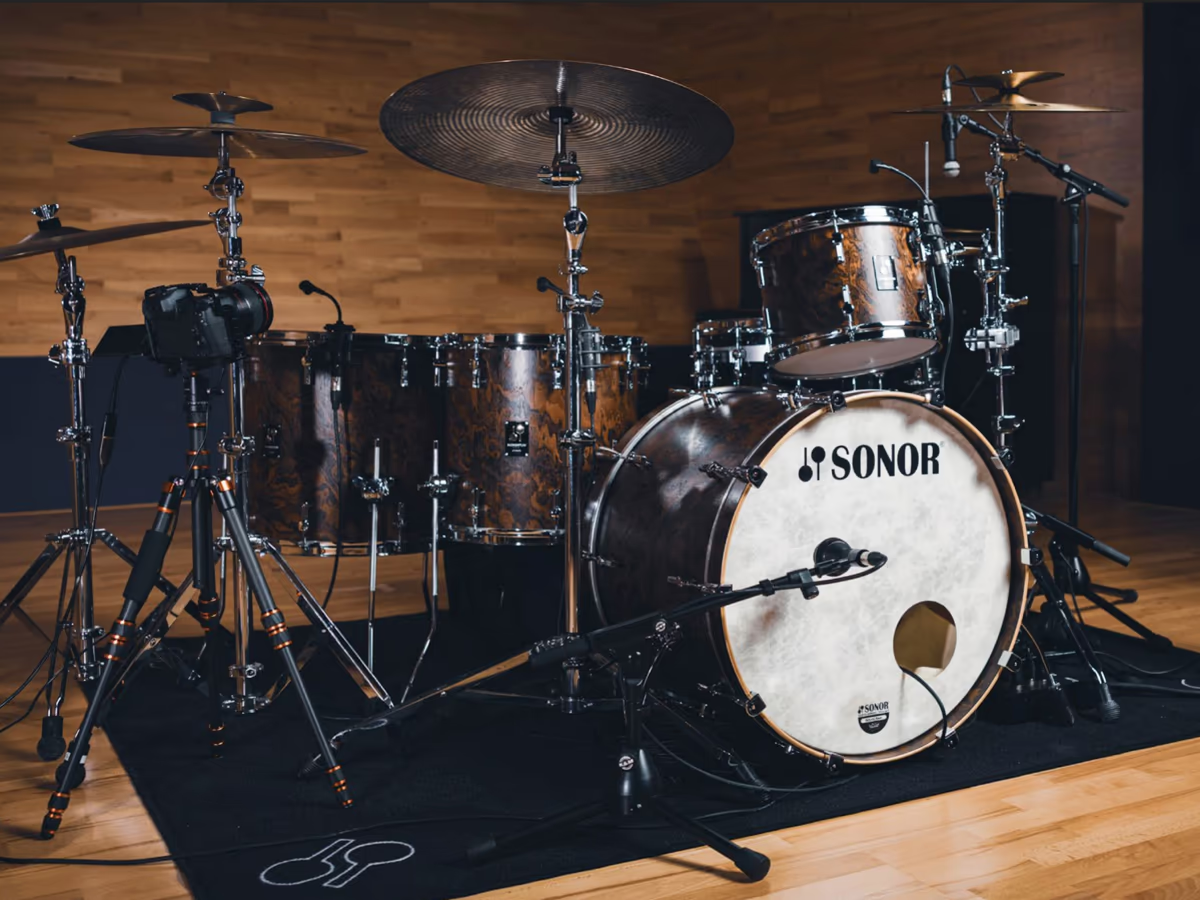
What Is a Drum Kit? Role, Priorities, and Real Budget Advice
Read article →
Pillar Article·10 min read
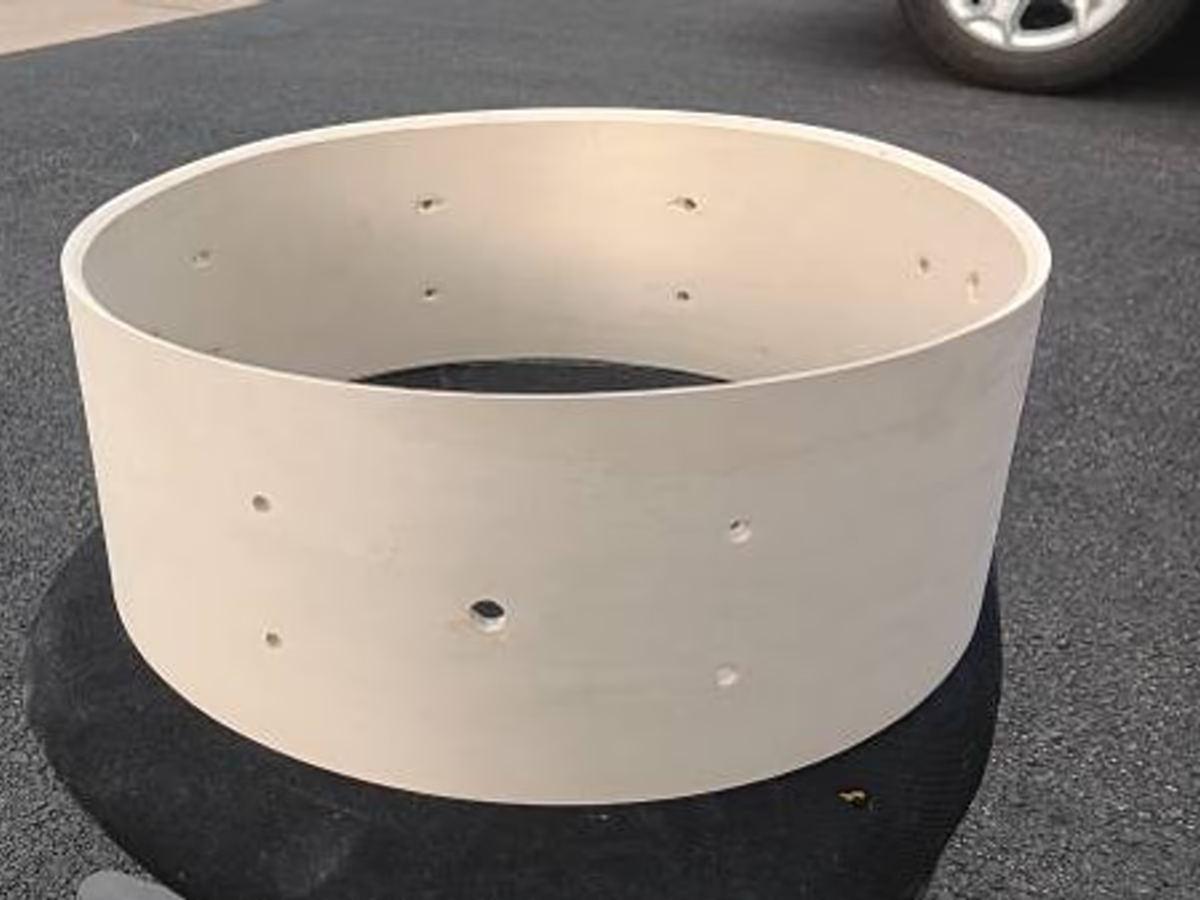
Poplar Drum Shells: Real Sound, Pros, Limits, and Buyer Context
Read article →
Pillar Article·11 min read
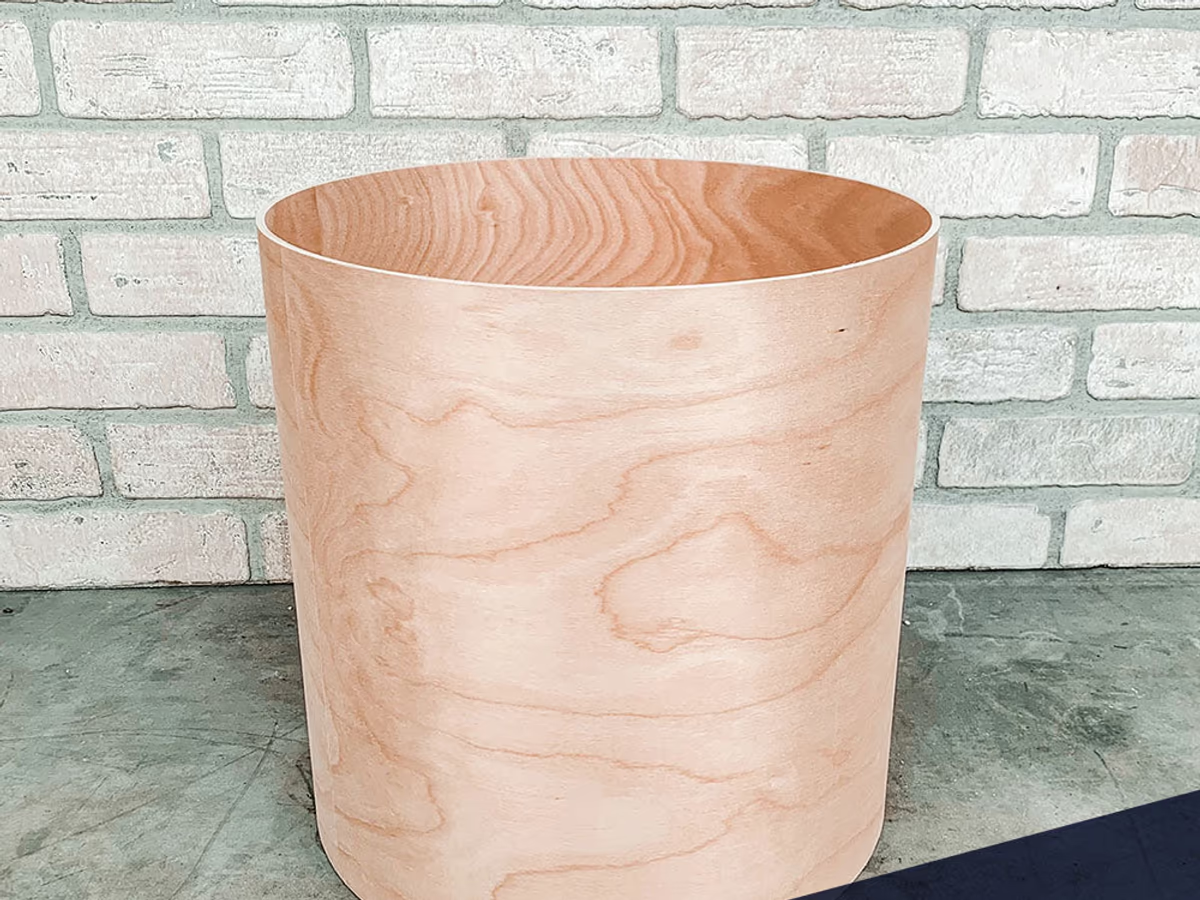
Birch Drum Shells: Fast Attack, Studio Clarity, and Modern Punch
Read article →
Pillar Article·8 min read
Best Ride Cymbals Under $300 (That Don't Sound Cheap)
Read article →